 Appointments
 Locations
 Donor Portal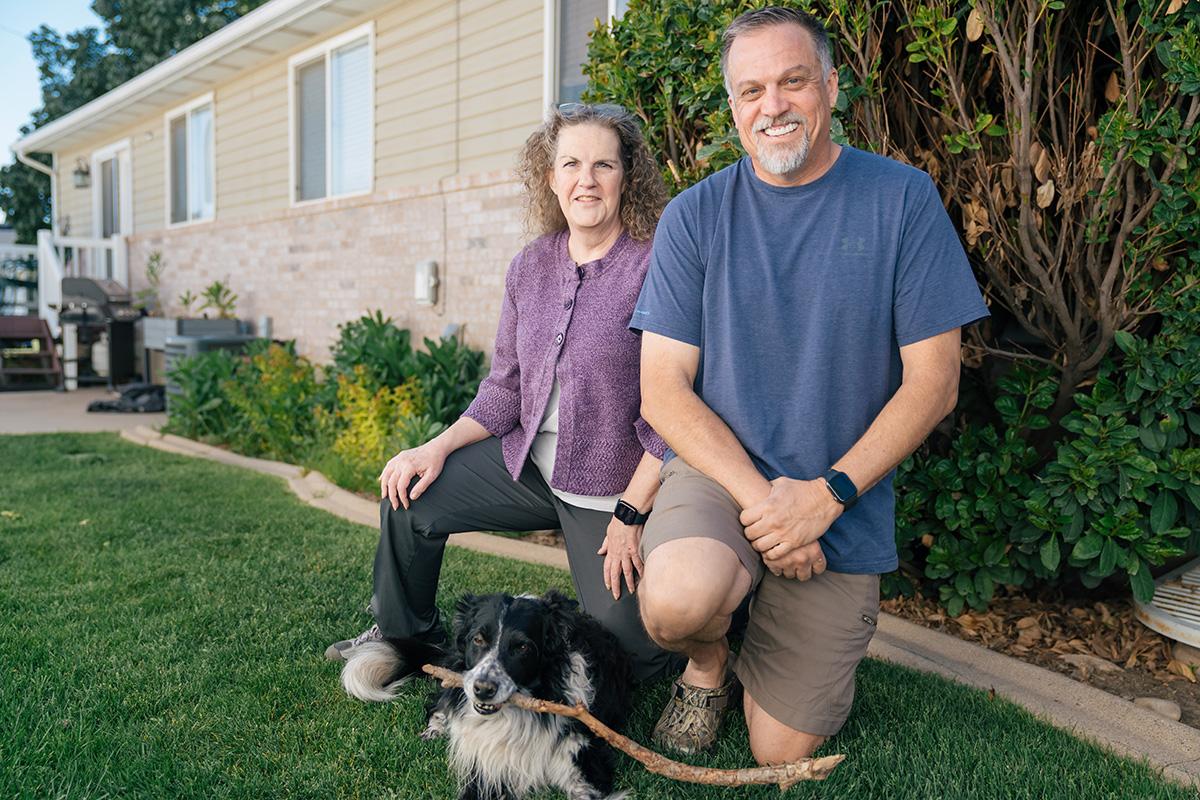
“Like fire. Just like a firecracker going off in your chest.”
For Mike Gamble, 55, of Kaysville, Utah, that’s how it felt to get shot point-blank in the torso. A 9-millimeter slug from a stolen gun entered his chest and traveled through his lung and liver before lodging in his lower back, where it still remains. The shooter was a 15-year-old boy from Ogden believed to be undergoing a gang initiation ritual.
Mike couldn’t have known what was coming on the afternoon of November 8, 2023, on the causeway leading to Antelope Island within the Great Salt Lake. This information had to be pieced together over the next several days as he floated in and out of sedation in the intensive care unit. He and his wife of 33 years, Lisa Gamble, shared their full story for the first time with ARUP Blood Services in honor of National Trauma Awareness Month.
The day began with Mike entertaining three visitors from California—his younger brother, his nephew, and a friend of theirs—at Antelope Island State Park. The four were driving down the causeway to leave the island when they came across a vehicle blocking the road with three teenage boys inside. Mike and his brother, Sean, attempted to find out what was happening. While they were wondering if the altercation was going to become physical, one boy reached under his T-shirt, pulled out a pistol, and fired into Mike’s chest. Sean, a retired corrections officer, happened to have his own gun on him, and his training kicked in.
“Most people that are law enforcement or military say they typically start shooting in that situation,” Mike said. “But my brother didn’t. In corrections, they work to deescalate things.”
Sean held the three boys at gunpoint, but the shooter escaped into the wetlands surrounding the Great Salt Lake. Sean not only saved the group from additional injury but also kept the situation from devolving. SWAT helicopters tracked down the shooter while Mike was flown to the University of Utah Hospital in Salt Lake City. When Sean called Lisa to tell her what had happened, he didn’t know where the helicopter was taking Mike.
“I asked him to describe the helicopter to me, and when he said there was a big ‘U’ on the side, I knew, and I just jumped in my car and started driving there,” Lisa said. As a registered oncology nurse with 28 years of experience, the description of the helicopter had told her everything she needed to know.
The next few months put enormous strain on the Gambles. A third of Mike’s liver had to be removed because the bullet severed two arteries. He fought fevers and infections while struggling to regain his breathing capacity. Doctors expected a 30- to 60-day recovery, but it was more than 120 days before Mike was done with hospitals. He was laid off from his job due to the length of his recovery.
An outpouring of support kept the Gambles afloat, and a GoFundMe campaign brought in much-needed cash. Friends and relatives stepped into support roles as Mike’s recovery took its toll on the couple. Suddenly, Lisa was maintaining their household and dealing with the financial fallout on her own. The couple relied heavily on the Utah Office for Victims of Crime, which provides compensation and reimbursement for the victims of violent crime, something the Gambles said they are endlessly grateful for.
Throughout the ordeal, Mike said he found his survival instincts to be a motivator unlike any other.
“I just had a major desire to live,” he said.
Since the shooting, Mike has struggled with anxiety and hypervigilance, which is common in trauma survivors. Lisa said violent television shows became too much for him, and she said he constantly examines every possible angle in stressful situations, occasionally to the point of panic.
An avid outdoorsman, Mike said hiking with his trusty dog, Chase, helped him achieve a full physical recovery with no long-lasting repercussions. Being able to have frank discussions with close friends was also therapeutic, and he noted his support network was a key component of his emotional recovery.
“Don’t be afraid to talk about your trauma,” Mike said. “I think guys, especially, just don’t share their feelings, and it’s OK to share your feelings.”
Mike said he’s a regular blood donor now because of the shooting. Numerous units of blood were administered not only in the aftermath of the shooting but also in the surgeries that followed to save his life. While many people donate blood after incidents like his, Lisa said the time to donate is before the unthinkable happens so that supplies are high when they’re needed.
“As wonderful as humans are, we haven’t been able to make anything that replaces blood,” said Lisa. “There’s no substitute.” Call 801-584-5272 or visit our donor portal to find out how you can donate.
